Waitomo and urban eco-experiences
Waitomo is the country’s internationally recognised glowworm-cave hub, with established guided cave formats. Tourism New Zealand also points to designed glowworm encounters in Auckland and Rotorua.
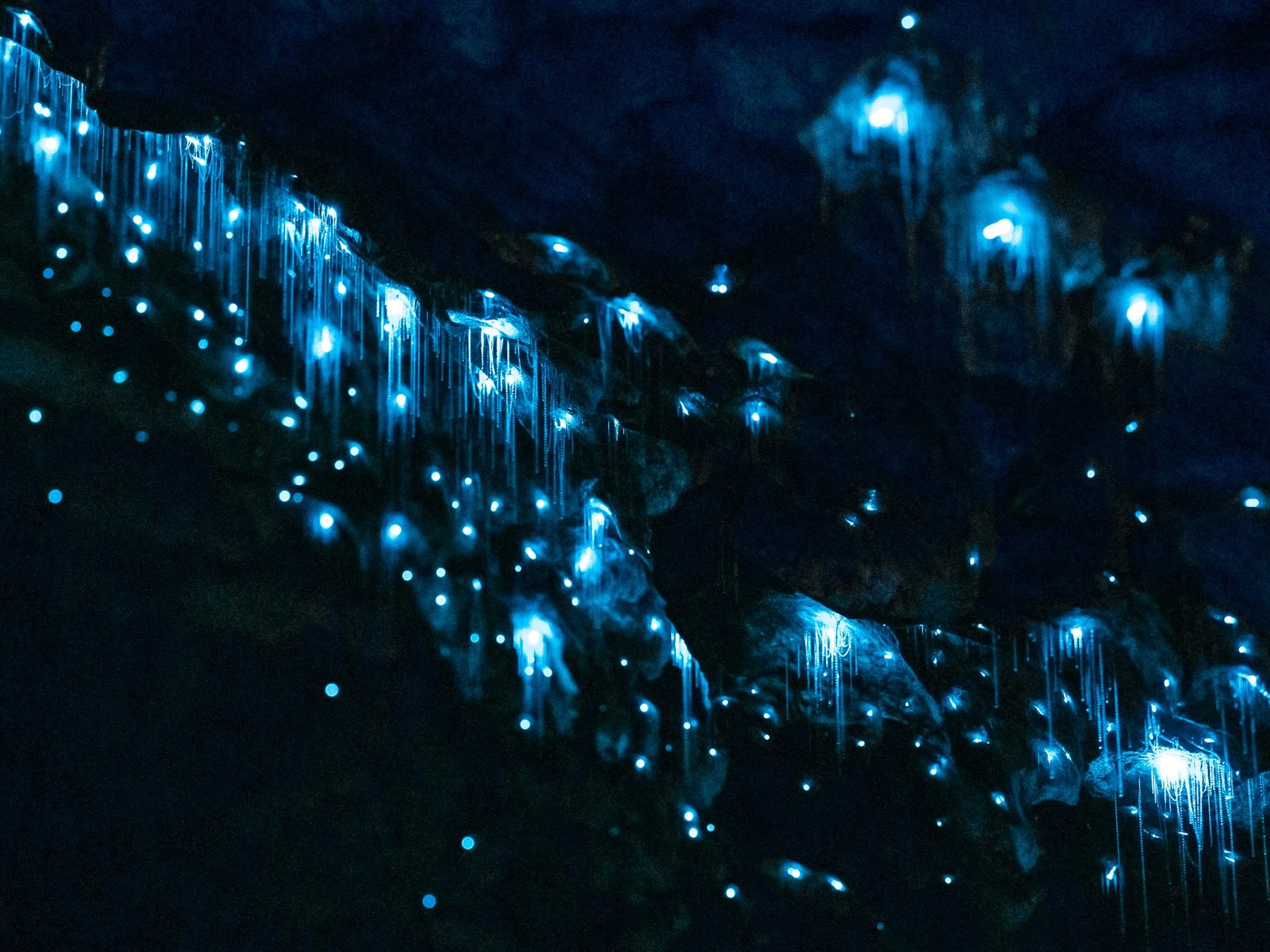
New Zealand’s glowworm experiences range from guided cave boats to rough self-guided passages. Use the island, access style and wider journey to choose the setting that fits your trip.
New Zealand’s best-known glowworm is Arachnocampa luminosa, a fungus gnat whose larvae create blue-green light and lower sticky threads to catch insects. Cave colonies can glow at any hour because their world is already dark.
That biology links the destinations, but it does not make the visits interchangeable. Te Anau pairs a lake crossing with an active river cave. Waitomo is a North Island cave-tour centre. Charleston layers rainforest travel into a West Coast cave visit, while Clifden is a rough, unguided Southland cave for properly equipped groups.
Start with the route you are already travelling. Te Anau belongs naturally in a Fiordland journey, while Waitomo, Charleston and Clifden answer very different regional plans.
Waitomo is the country’s internationally recognised glowworm-cave hub, with established guided cave formats. Tourism New Zealand also points to designed glowworm encounters in Auckland and Rotorua.
Te Anau combines lake travel with a guided cave. Charleston approaches limestone through West Coast rainforest. Clifden is a demanding self-guided cave rather than a managed sightseeing tour.
The most useful comparison is not which glow is “best”. It is how each experience fits the rest of your route and your comfort with cave conditions.
| Destination | Island and region | Access style | Distinctive context |
|---|---|---|---|
| Te Anau | South Island, Fiordland | Guided lake cruise, cave walk and small boat | Young river cave with waterfall, forested shore and a silent grotto |
| Waitomo | North Island, Waikato | Established guided cave experiences | New Zealand’s most widely known glowworm-cave destination |
| Charleston | South Island, West Coast | Guided rainforest and cave journey | Paparoa limestone and rainforest travel form part of the approach |
| Clifden | South Island, Southland | Unguided natural cave | Rough, slippery and flood-prone terrain for experienced, equipped groups |
Te Anau creates its contrast before you go underground. The town check-in, open lake and western-shore forest make the cave feel remote without requiring an independent cave approach.
Once inside, the river remains part of the story. Guides lead you beside moving water and into the glowworm grotto by small boat. This makes Te Anau a strong fit when Fiordland is already central to the trip and you want transport, interpretation and cave access organised as one experience.
Plan the Te Anau check-in point, driving time and boat departure.
Explore the Te Anau Tour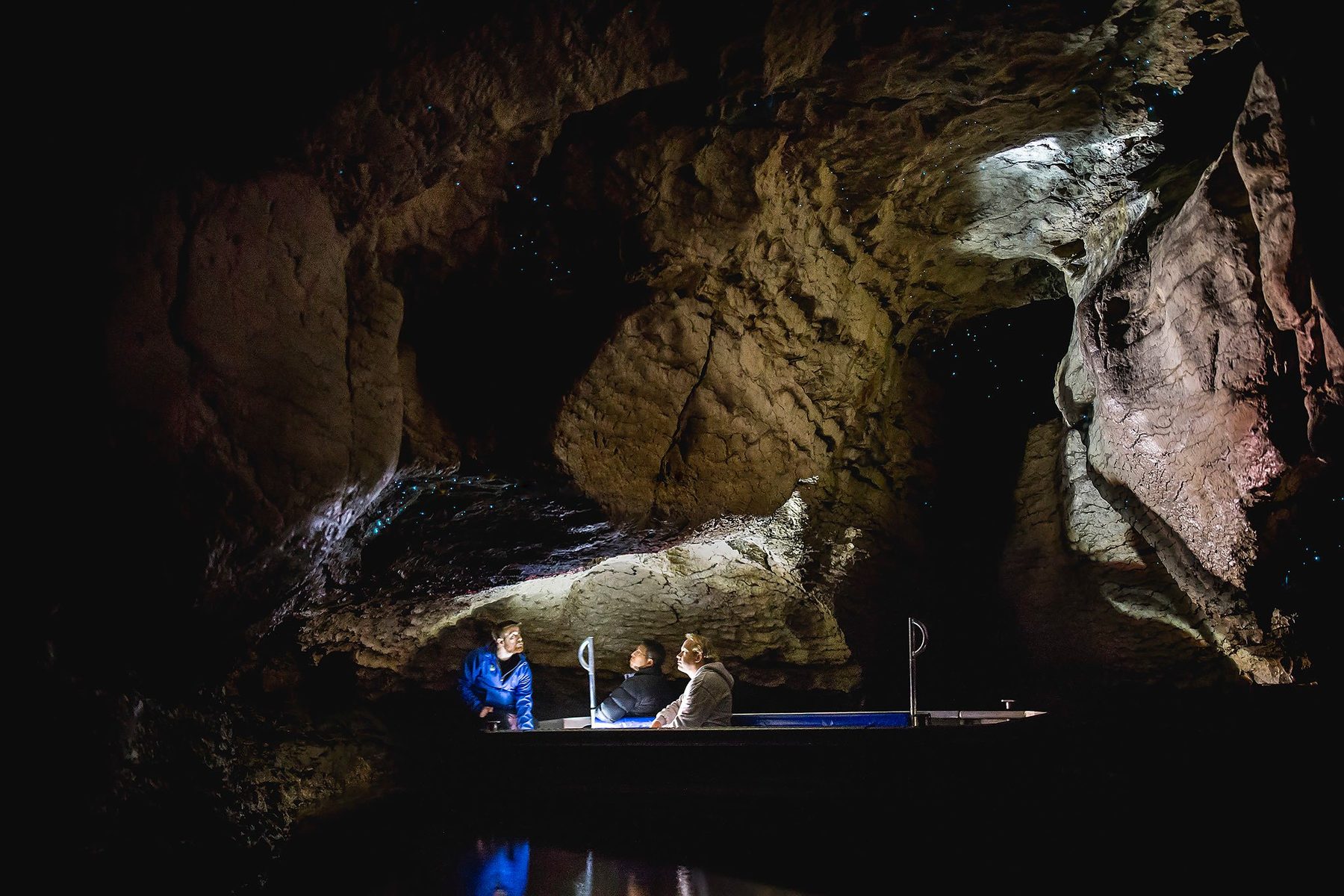
Waitomo makes sense when Auckland, Rotorua or the central North Island already anchors the itinerary. Its reputation and range of established cave experiences make it a destination in its own right.
Charleston connects the underground experience to Paparoa’s rainforest and limestone landscape. It suits a South Island journey moving along the West Coast rather than through Fiordland.
Clifden is not a casual substitute for a guided tour. The Department of Conservation warns of rough surfaces, low ceilings, slippery conditions and flash-flood risk. It is for experienced, properly equipped groups and is unsuitable after heavy rain.
A good choice accounts for geography, supervision and physical conditions before it accounts for the photograph.
Fiordland is already in your route and you want a managed lake-and-cave experience with a clear town departure.
Your trip is on the North Island and a well-established cave destination fits the road journey.
The South Island’s West Coast and rainforest travel are part of the appeal.
Your group has the experience, equipment and current-condition awareness for a rough unguided cave.
Glowworm displays depend on dark, damp environments. Follow guide instructions, keep lights and cameras away where prohibited, avoid touching cave surfaces and never treat wild glowworm habitat as a stage set.
For broader destination context, see Tourism New Zealand’s glowworm guide. For current Clifden conditions and safety advice, consult the New Zealand Department of Conservation.
Follow the lake crossing, cave route, grotto boat, practical requirements and current booking details in one focused tour guide.